


Eine Mission nach Island
Vier Tage unterwegs mit den Fotografen Emil Sollie und Hallvard Kolltveit
Vier Tage unterwegs mit den Fotografen Emil Sollie und Hallvard Kolltveit
Ein viertägiger Roadtrip
Im Oktober haben wir die Fotografen Emil Sollie und Hallvard Kolltveit auf einer Reise nach Island begleitet. Die beiden Norweger bereisen als Lifestyle- und Werbefotografen die Welt, und diesmal fotografierten sie mit Freunden für die Reiseausrüstungsmarke Db. Wir haben die Crew mit Jacken von Scandinavian Edition ausgestattet, um sie vor dem rauen Klima Islands zu schützen.
Tag 1
Unser Flug ging frühmorgens in Oslo los, und um 8 Uhr landeten wir bei einem wunderschönen Sonnenaufgang in Keflavík. Mit zwei vollgepackten Geländewagen fuhren wir Richtung Vík, unserem ersten Halt im Süden Islands. Auf dem Papier dauert die Fahrt drei Stunden – in Wirklichkeit kommen für Fotostopps noch drei bis sechs dazu. Nach dreißig Minuten sahen wir den ersten Berggipfel mit frischem Schnee. Ein kurzes Fotoshooting, und schon waren wir wieder unterwegs.


Beim Autofahren in Island vergeht die Zeit wie im Flug – drei Stunden fühlten sich an wie anderthalb. Die Straßen sind überraschend gerade, und es gibt immer einen Wasserfall, einen Gletscher oder einen Berggipfel zu sehen. Wir hielten am Skógafoss, einem Wasserfall, der 25 Meter breit und 60 Meter hoch ist. Nimm eine wasserdichte Jacke mit: Die Luft ist voller Gischt, und unsere Kleidung war schnell mit feinen Wassertropfen bedeckt.

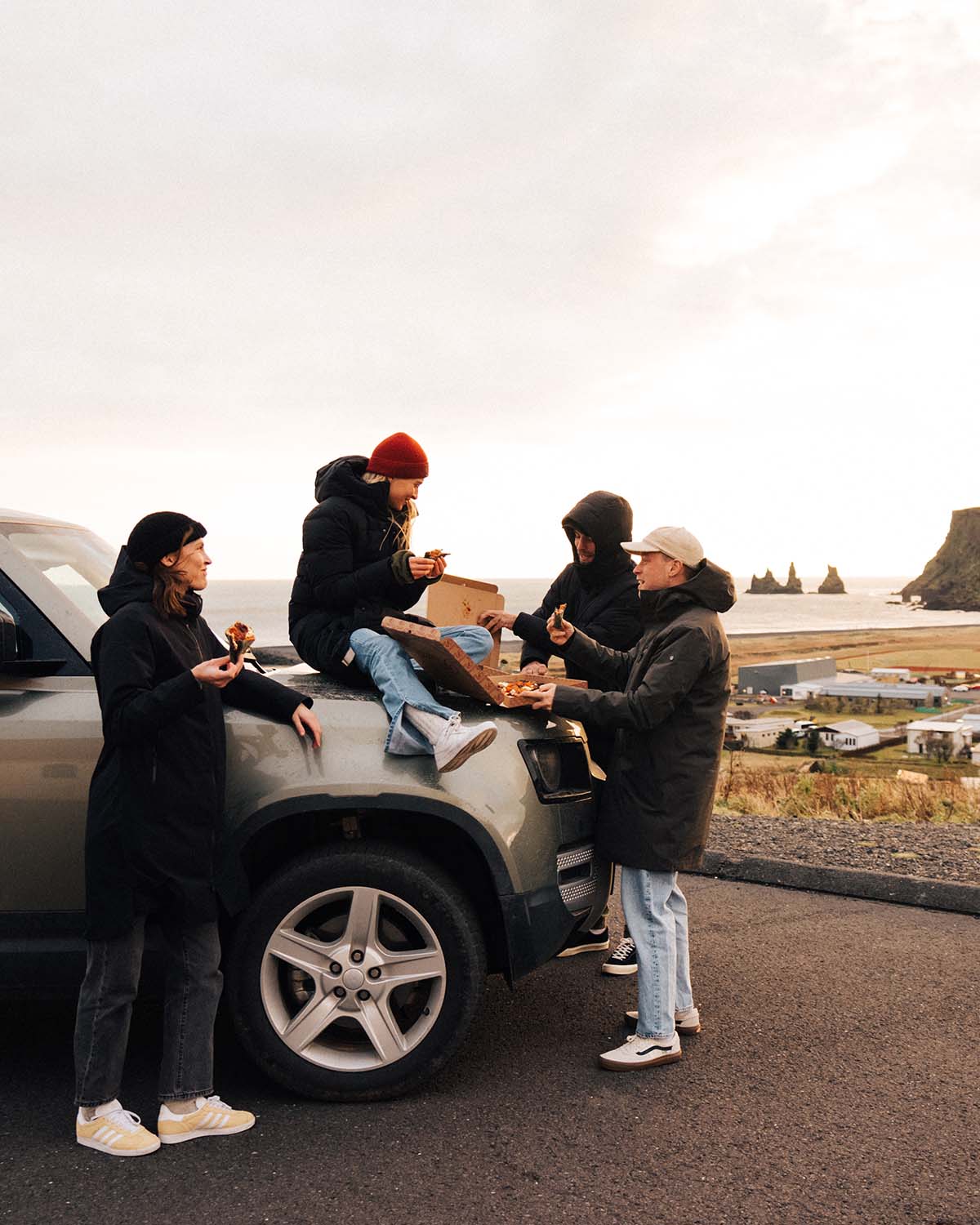
Am späten Nachmittag erreichten wir Vík. Es ist wohl einer der meistfotografierten Orte Islands, und man sieht sofort, warum: eine dramatische Küste, schwarze Strände und schroffe Klippen, dahinter gletscherbedeckte Berge. Der Nordwind blies heftig, doch das hielt uns nicht davon ab, Pizza zu essen und dabei zuzusehen, wie die Sonne über dem Ort unterging.


Tag 2
Um 05:30 klingelte der Wecker für die Fahrt zum Jökulsárlón, der größten und bekanntesten Gletscherlagune Islands, zweieinhalb Stunden südöstlich von Vík unterhalb des Vatnajökull-Gletschers. Das war das Hauptziel der Reise: Emil und Hallvard fotografierten die neue Glacier Green Kollektion von Db und setzten die Taschen in einer Gletscherlandschaft in Szene, um die Farbe zur Geltung zu bringen. Der Jökulsárlón ist ein beeindruckender Anblick, mit riesigen grünen und blauen Eisblöcken, die in der Lagune treiben.

Hallvard in Loft, Dunkeloliv

Kristin in Meridian, Onyx
Nächster Halt war das Fischerdorf Höfn für einen schnellen Imbiss, bevor wir für ein Sonnenuntergangs-Shooting nach Stokksnes fuhren. Zwanzig Minuten außerhalb von Höfn ist Stokksnes bekannt für die dramatischen Vestrahorn-Berge, die sich 454 Meter hoch erheben und steil zu einem schwarzen Sandstrand abfallen. Ein magischer Ort – man findet sogar eine Welle zum Surfen (haben wir gemacht) – und man kann hier leicht stundenlang einfach umherlaufen.

Nach einem warmen Essen in unseren Apartments entdeckte Hallvard auf der Rückfahrt die ersten Anzeichen von Nordlichtern hinter einem Berg. Nachdem er zwei Jahre auf den Lofoten gelebt hat, kennt er sich damit aus: Stellt euch auf eine lange Nacht ein, meinte er – am stärksten sind sie meist zwischen 1 und 3 Uhr nachts. Später am Abend fuhren wir zurück zum Jökulsárlón, um zu sehen, ob er recht hatte. Nach ein paar Stunden Warten begann die Magie. Es war jede Minute einer kalten Nacht wert.


Tag 3
Wir wachten bei typisch isländischem Wetter auf: starker Nordwind, dazu Schnee und Nebel, die von den Bergen herunterzogen. Der einzige Plan waren die 500 Kilometer zurück nach Reykjavík, also ließen wir uns von der Straße leiten.


Eine Stunde nach Abfahrt bog Hallvard scharf rechts auf eine Schotterpiste ab. „Seht euch den Gletscherarm an, der das Tal herunterkommt“, sagte er. „Ich glaube, wir kommen mit den Geländewagen bis ganz nach oben.“ Bis dahin hatten wir die Autos kaum für das genutzt, was sie können – die meisten Stopps lagen nah an den Hauptstraßen. Das hier war etwas anderes: 20 Kilometer grober Schotter, Schlaglöcher voller Eis und Wasser und eine Flussdurchquerung, bevor wir den Fuß des Gletschers erreichten.
Ohne jedes Hindernis war der Wind stärker als alles, was wir bisher erlebt hatten – Böen von mehr als 20 Metern pro Sekunde hoben uns beim Aussteigen fast vom Boden. Am Rand eines Gletschers zu stehen, meilenweit von allen entfernt, und die rohe Kraft der Natur zu spüren, war ein Höhepunkt der Reise.

Kurz vor Reykjavík war der Sonnenuntergang ein weiterer Höhepunkt. Der Wind hatte Vulkansand in den Himmel gewirbelt, der wie Feuer aufleuchtete – ein passender Abschluss unseres Roadtrips durch den Südosten.


Tag 4
Nach drei Tagen an Orten, an denen das nächste Restaurant zwei Stunden entfernt sein kann, waren wir bereit für etwas Stadtleben. Reykjavík ist die nördlichste Hauptstadt der Welt, liegt im Südwesten der Insel und ist klein genug, um sie zu Fuß zu erkunden.


Die Hallgrímskirkja ist kaum zu übersehen: Die 74 Meter hohe Kirche ist das höchste Gebäude der Stadt – nur ein Bürogebäude im Vorort Kópavogur ist höher.

Die Crew, von links: Veslemøy (@veesla), Eivind (@eivlea), Hallvard (@hallvardkolltveit), Kristin (@kristinsaunes) und Emil (@emilsollie).
Von der Reise


Gekleidet für das Wetter
 Nimbus — Mitternachtsblau
€399.00
 Loft II — Onyx
€649.00
 Range III — Mitternachtsblau
€479.00
 Hood II — Zeder
€349.00
 Tyo — Carbon
€599.00
 Urban II — Onyx
€749.00
 Map II — Dunkelbraun
€249.00
 Ratio III — Graphit
€289.00
 Trip II — Dunkelbraun
€299.00
 Link — Mitternachtsblau
€399.00
 Meridian II — Onyx
€849.00
 Swell III — Mitternachtsblau
€699.00
 Veil II — Khaki
€349.00
 Flair Short — Zeder
€399.00
 Acme II — Onyx
€599.00
 Leeway — Carbon
€429.00
 Block II — Onyx
€549.00
 Node II — Khaki
€389.00
 Air II — Graphit
€359.00
 Prevail — Onyx
€649.00
 Port Shorts — Marineblau
€119.00
 Drift Shorts — Marineblau
€129.00
Wettervorhersage: MET Norway, CC BY 4.0
A Four Day Adventure Road Trip
In October, we tagged along with photographers Emil Sollie and Hallvard Kolltveit to Iceland. The two Norwegians travel the world as lifestyle and commercial photographers. For their trip to Iceland, they were on a mission with friends to shoot for travel gear company Db. We equipped the crew with Scandinavian Edition jackets to protect them from Iceland's harsh climate.
DAY 1 — Arrival and the first sight of snow
Our flight to Iceland left Oslo Airport early in the morning, and we arrived at a beautiful sunrise in Keflavik at 8 AM. After packing our two 4x4s, we drove towards Vík—our first destination in the southern part of Iceland. The drive is 3 hours on paper, but you will probably spend an extra 3 to 6 hours for scenic stops. We stopped 30 minutes into our drive—spotting the first mountaintop covered with fresh snow. Then, after a quick photo session, we continued our drive south.


Time flies when you are driving in Iceland—3 hours felt like 1,5. The roads are surprisingly straight, and there is always some waterfall, glacier, or mountaintop to look at, which takes your mind off the distance. We stopped at the famous Skógafoss—a 25 meters wide and 60 meters tall waterfall. Ensure to bring a waterproof jacket when visiting waterfalls as the air in the area was filled with water spray—our clothes were quickly covered with tiny drops of water.

We arrived in Vík late in the afternoon and explored the area. Vik is probably one of the most photographed places in Iceland. Still, it is easy to understand why—the place is super scenic, with a dramatic stretch of coastline, black beaches, and rugged sea cliffs combined with glacier-topped mountains in the background. The northern winds were blowing super hard, but that did not stop us from having pizza as we watched the sunset overlooking town.
DAY 2 — Time to shoot some Glaciers
The alarm was set for 05:30 the next day for our drive to Jökulsárlón—Iceland's largest and most famous glacier lake. Jökulsárlón sits below the glacier Vatnajökull and another 2,5 hours drive southeast of Vík. Jökulsárlón was our main destination for the trip. Emil and Hallvard were shooting content for the new Glacier Green collection for Norwegian travel gear brand Db. The idea was to place the bags in a glacier environment to showcase the color. Jökulsárlón is an impressive sight—colossal green and blue ice blocks are floating around in a lake below the glacier.

Hallvard is wearing Loft in Dark Olive
View Details
Kristin is wearing Meridian in Onyx
View DetailsNext, we headed to the fishing village of Höfn. We had some light snacks before driving to Stokksnes for a sunset shoot. Stokksnes is located 20 minutes outside of Höfn and is known for its dramatic, Game of Thrones-looking mountains named Vestrahorn. The mountain range tops at 454 meters and drops straight down onto a black sand beach. It is a magical place where you can even find a wave to surf (which we did). You can easily spend a couple of hours just walking around and soaking up the magic of this place.

After Stokksnes, we drove to our hotel apartments and enjoyed a hot meal. On our way home in the dark, Hallvard spotted some early signs of Northern Lights peaking up behind a mountain. Having lived in the Lofoten Islands in Norway for two years, Hallvard knows a thing or two about Northern Lights. He told us we should plan for a long night—Northern Lights are usually most intense between 01:00 and 03:00 after midnight. Later that evening, we headed back to Jökulsárlón to see if he was right. We waited a couple of hours before the magic started happening—it was worth the long wait on a cold night.
Day 3 - 4x4 fun
The following day we woke up to typical Icelandic weather—winds blowing hard from the north with snow and fog coming down from the mountains. We had no plans for the day other than driving the 500 kilometers back to Reykjavik. We wanted to let the road guide us.


One hour into the drive, Hallvard took a hard right turn onto a gravel road —«Guys, look at that glacier arm coming down the valley,» he said. «I think we can drive up to this one with our 4x4s.» Until now, we had not fully had the chance to utilize our cars' 4x4 abilities. Most of our stops had been close to main roads adapted for tourists. This was another beast. We drove 20 kilometers on rugged gravel rounds with big potholes filled with ice and water and even crossed a river before arriving at the glacier base. With nothing to stop its path, the wind here was more powerful than we had experienced earlier that day, and we almost got lifted from the ground when we exited our vehicles. The gusts were blowing at 20+ meters per second. It was a magical moment standing at the edge of a glacier in this remote place with no other people for miles and feeling nature's raw power. A definite highlight of the trip.

As we got closer to Reykjavik later that day—the sunset was another highlight. The strong winds had kicked up volcanic sand into the sky, which lit up like fire—what a way to end our road trip to the southeast.
Day 4 - Exploring Reykjavik
Waking up in Reykjavik, we had just spent the past three days in some very remote places where you have to plan your next meal because the next restaurant could be two hours down the road—we were ready for some urban treats. Reykjavik is the world's most northern capital city. The city is located in the southwestern part of the island. It is not a large city, so walking on foot is the optimal way of exploring.


It is hard not to notice the eye-catching 244 feet high church named Hallgrimskirkja—the tallest building in the city. Only an office building in the suburb Kopavogur is taller.

The crew from left to right: Veslemøy (@veesla), Eivind (@eivlea), Hallvard (@hallvardkolltveit), Kristin (@kristinsaunes) and Emil (@emilsollie)
SHOP THE LOOK


